The Hatahana project was created in 2025 as a non-profit effort dedicated to improvement of Tel Aviv Central Bus Station. This is an unofficial project, created on a voluntary basis and without any involvement from the station’s administration or the city municipality. It is developed without a budget. That said, cooperation and donations are very welcome - please contact us via the contact form.
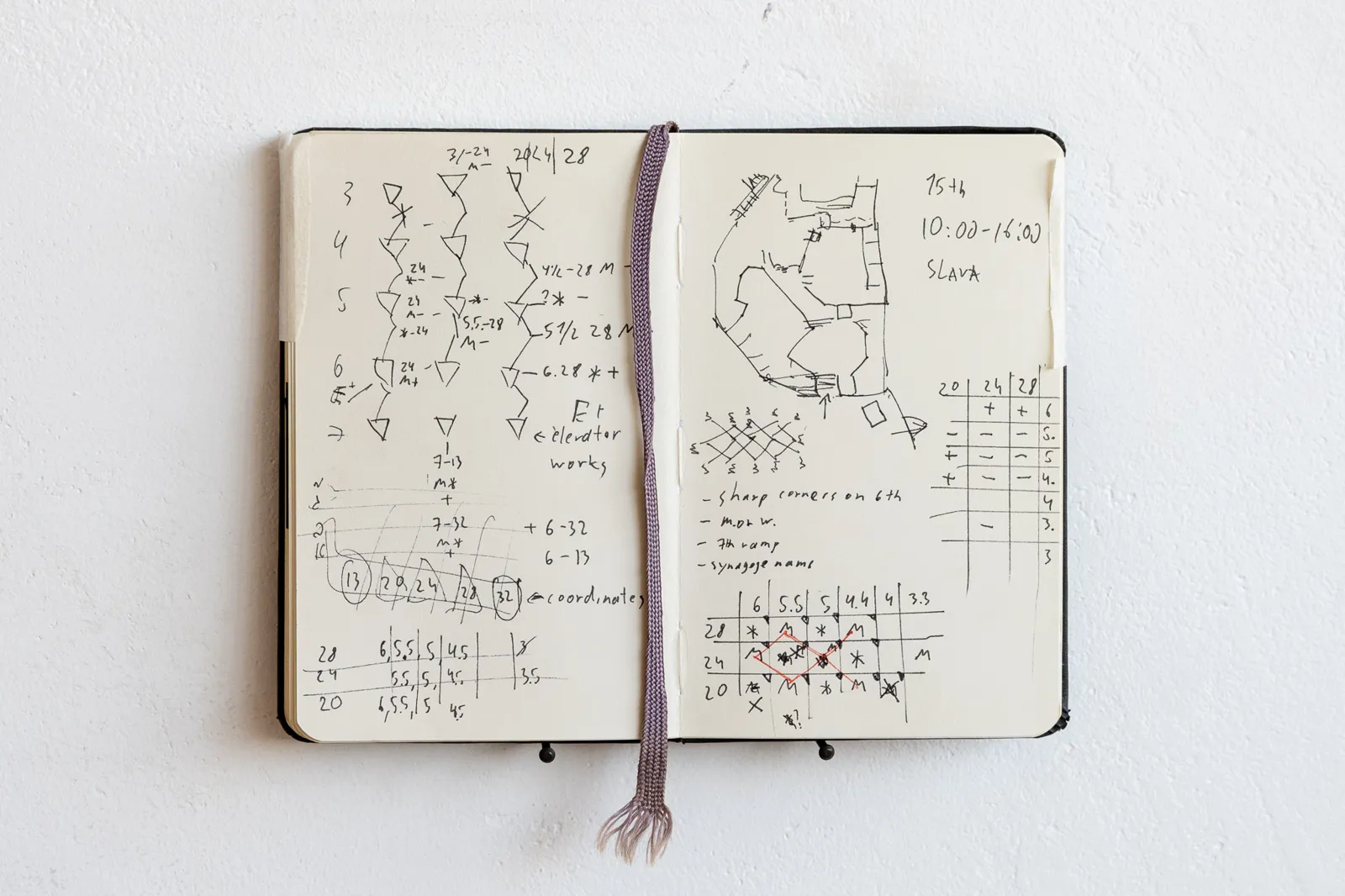 Bathrooms in Towers — On-Site Research
Author and support
The project is led by Mikhail Korotkov, a social-activist, photographer and visual-research artist. His work explores social, political, and religious themes.
Informational and moral support provided by Yung Yidish and Mendy Cahan, a non-profit organization, cultural center, and Yiddish library located in the Central Bus Station.
Special thanks to Tahana Merkazit Moshing Crew for the steady supply of punk-rock concerts at the station.
Goal
Our goal is to raise awareness of the station and address its many issues: wayfinding for travelers and visitors, understanding the general layout, business visibility, and more—anything that can be improved through research, art, design, coding, and small publications. The station itself has no official website or social media presence and makes no visible effort to address these issues or communicate with the public at all.
Firstly, we can define two major issues that we can realistically solve with this project:
- Navigation. The station was built as a maze, so basic tasks like finding an exit, a toilet, or a bus platform are difficult.
- Explanation. The station has uniquely confusing features, such as abandoned floors, the 4th floor serving as the main entrance, non-functioning elevators, and the existence of “two 7th floors.”
- The map
Drawn from scratch using numerous real plans as references. Simplified, updated, and improved-serving as the first step and a fundamental solution to most of the issues. - Travel guide brochure
A small, bilingual, pocket-sized brochure offering real, practical help for travelers and visitors:- provides a basic understanding of the station;
- explains its layout, entrances, exits, toilets, and basic necessities;
- helps people find the bus platform they need;
- explains how to get to the platform;
- explains how to exit the station after arriving by bus;
The simplest approach is to place brochures at the entrances, on guards’ tables. A more effective option, though requiring a budget, would be to install dedicated stands in key locations throughout the station. These stands would both distribute brochures and display the same information. - Shopping guide brochure
A map that highlights all businesses operating in the station. - Website hatahana.com (you are using it right now)
Information for travelers and visitors, map, mirroring information form travel and shopping brochures, adding interactivity. This will be an ongoing task, with step-by-step updates. - Tahana as brand
All the plans mentioned here should be unified under one name, logo, color scheme, and design, with future potential social media integration in mind. We cannot-and don’t want to-impersonate anyone by using the real station’s logo and name. - Evacuation maps
This is a standard feature in Europe. There is no excuse for a building this large and confusing to lack basic safety measures such as evacuation maps. - Wayfinding
Finding the exit or toilets by following the official pointers is practically impossible-some sections of the station have been closed off, or barricaded, but all the signs pointing to them are still there. While we cannot remove these signs ourselves, we can leave, in a guerilla way, additional clarifications in the most problematic corners of the station.
The abovementioned issues can be solved in various way, here are some of the our plans to do so, in no particular order: